


What Type of Fluids Are Best to Enhance Hydraulic Press Performance
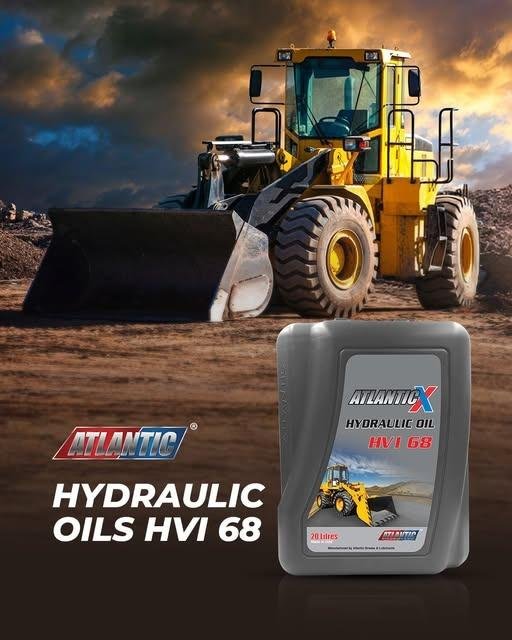
A simple but essential piece of equipment, a hydraulic press is used in many different sectors. Pascal's law, which holds that pressure applied to confined fluids causes the pressure change across the whole fluid, forms the basis of its functioning principle. One important consideration that has to be given is the kind of fluid utilized in these systems to guarantee effective and safe operation. This blog explores the kinds of fluids used in hydraulic presses, the justification for choosing liquids over gases, and the choice of oil as a primary medium.
What Kind of Fluid Goes in a Hydraulic Press?
The hydraulic fluid used in a hydraulic press determines its basic running performance. The medium via which power is transferred inside the system is this fluid. It must have particular qualities to guarantee the press runs as it should. The fluid should have:
· A high bulk modulus of the fluid will indicate low compressibility, guaranteeing consistent pressure transmission.
· Stable viscosity for a variety of temperatures guarantees consistent flow rates.
· Good lubricating qualities help to lower friction and wear in the system.
· Oxidation resistance is meant to stop varnish or sludge from developing.
· Low pour point to stay fluid at low temperatures.
The fluid should help power transmission, lubricate the system, cool it by removing heat, and seal the clearances between several components to stop leaking.
The Types of Hydraulic Fluid
Four main kinds of hydraulic fluids are used in different sectors; each has special qualities and uses. Operating temperature range, system pressure, and environmental concerns, among other things, determine the fluid choice.
Petroleum-based Hydraulic Fluids
Petroleum-based hydraulic fluid is the most commonly used kind of hydraulic fluid. Made from refined crude oil, these fluids are usually reasonably priced, have great lubrication, wide temperature and pressure operating ranges, and offer great consistency.
Pros
· They come with high natural lubricity.
· Stable chemical properties
· Easily available for use.
Cons
· Highly flammable.
· Harmful to the environment if spilled.
Water-Glycol Based Hydraulic Fluids
Water-glycol fluids are made by combining water, ethylene, or propylene glycol with specific additives to improve lubrication and corrosion resistance. Usually, they find utility in systems where fire resistance takes the front stage.
Pros
· Non-flammable
· Available at a low cost as compared to other fire-resistant fluids.
Cons
· Limited temperature range.
· It can cause corrosion if not maintained properly.
· Provide less wear protection.
Synthetic Hydraulic Fluids
Synthetic fluids are designed to function in extreme environments. They cover polyalphaolefins, polyalkylene glycols, organophosphate esters, and phosphate esters.
Pros
· Extraordinary thermal stability.
· Fire resistance
· It can operate over a wide temperature range.
Cons
· Expensive
· They require special seals due to their aggressive nature.
Environmentally Friendly Hydraulic Fluids
Biodegradable hydraulic fluids are usually synthetic esters or vegetable oil-based. These are meant to reduce environmental effects in case of leaks or spills.
Pros
· Non-toxic
· Biodegradable
Cons
· High cost
· They require special seals.
· Short lifespan
Why are Liquids Used in Hydraulic Presses?
One must grasp the fundamental ideas of fluid mechanics if one is to appreciate why liquids are chosen in hydraulic presses. Fluids, which comprise gases as well as liquids, are distinguished by their flow-characterizing ability. Still, their compressibility is the main distinction.
Highly compressible gases can vary greatly under pressure. Liquids, on the other hand, are quite nearly incompressible. Like in a hydraulic press, a force applied to a contained liquid sends the pressure uniformly in all directions. The bedrock of hydraulic systems is the quality of liquids to distribute applied pressure over their volume.
On the other hand, if gas were utilized, the starting pressure would compress the gas and absorb some of the energy meant for transmission, therefore lowering efficiency. Furthermore, gases are less suited for hydraulic press uses since their intrinsic compressibility can cause system instability.
The Most Common Liquid for Hydraulics
Petroleum-based fluids are the fluids most often utilized in hydraulics. There are several different reasons:
Versatility
Their wide range of operating temperatures and pressures makes them appropriate for a great variety of applications.
Lubrication
Their high lubricating qualities protect system components from wear and tear, thereby extending the lifetime of the system.
Cost-Effectiveness
Compared to synthetic or bio-based hydraulic fluids, petroleum-based fluids are more affordable.
Though they are somewhat popular, these fluids might not be appropriate for every use, especially in cases when environmental issues or fire risks take the front stage.
Why is Oil Used in a Hydraulic Press Instead of Air?
Although both air (a gas) and oil (a liquid) can be used to transmit power, oil is favored in hydraulic systems, and the reasons follow from the basic physical properties of both materials.
Being a liquid, oil is non-compressible. Therefore, when pressure is applied, it is instantly transferred to every component of the system and enables exact and instantaneous machinery control. Additionally, serving as a lubricant, oil reduces the friction on the moving components of the system.
On the other side, the air is rather compressible. This results in a delay and poorer responsiveness of the system as pressure is applied, since the air will compress before conveying the force. Additionally, it is prone to pulsations due to the air's compressibility, which causes unstable operation. Moreover, air lacks the lubricating qualities that oil offers, which increases the possibility of system friction and wear.
Wrapping Up
The fluid used in a hydraulic press determines its functionality. Whether it's a synthetic, environmentally friendly, water-glycol-based fluid, a petroleum-based fluid, or another, each has unique qualities that fit particular uses. The operating environment, system performance criteria, safety, and environmental impact of the fluid choice call for a thorough evaluation of many elements.
The basic ideas of fluid mechanics define how liquids, more especially oil used in a hydraulic press, behave. In hydraulic systems, oil's incompressibility and lubricating character make it the perfect medium for power transfer. Although some systems find use for gases such as air, their efficiency and stability are inferior to those of their liquid equivalents. The effective running and maintenance of hydraulic systems depend on an awareness of these features.
Read Also: Atlantic Oil Store Pakistan
الأقسام
إقرأ المزيد
Honkai Star Rail Update In Honkai: Star Rail, each character's role in battle is determined by their assigned path, giving players a clear idea of their combat style upon new character releases. To maintain excitement and introduce innovative gameplay elements, the game frequently unveils units from different paths, adding an element of surprise. For instance, the upcoming version 4.0 will...

In Italia, la traduzione Milano svolge un ruolo fondamentale per garantire una comunicazione efficace tra diverse lingue, sia in contesti professionali sia personali. Con l’espansione internazionale delle imprese e l’aumento delle interazioni culturali, la richiesta di una conversione linguistica accurata e affidabile continua a crescere. La traduzione non si limita alla...

Discover the enchanting world of wizarding folklore with the newly available audiobook, The Tales of Beedle the Bard. This collection features captivating stories narrated by renowned voices from the wizarding universe, bringing these magical tales to life. To get a taste, listen to a sample narrated by Evanna Lynch, who portrayed Luna Lovegood, and immerse yourself in the whimsical world of...
The Underfloor Heating Market is gaining traction globally due to the rising demand for energy-efficient and environmentally sustainable heating solutions. Unlike traditional radiators, underfloor heating provides a uniform heat distribution, reducing energy wastage and enhancing indoor comfort. The growth of residential and commercial infrastructure, coupled with increasing renovation...

As HBO Max continues its expansion across Europe, the company's leadership remains optimistic despite the ongoing sale of Warner Bros. Discovery in the United States. Their primary focus is on engaging viewers in eight new markets, including Italy and Germany, by emphasizing the unmatched quality of their programming. During the launch event in Rome, CEO JB Perrette expressed enthusiasm about...