


Fixed vs Handheld System Capabilities in Advanced RFID Tag Reader Technology
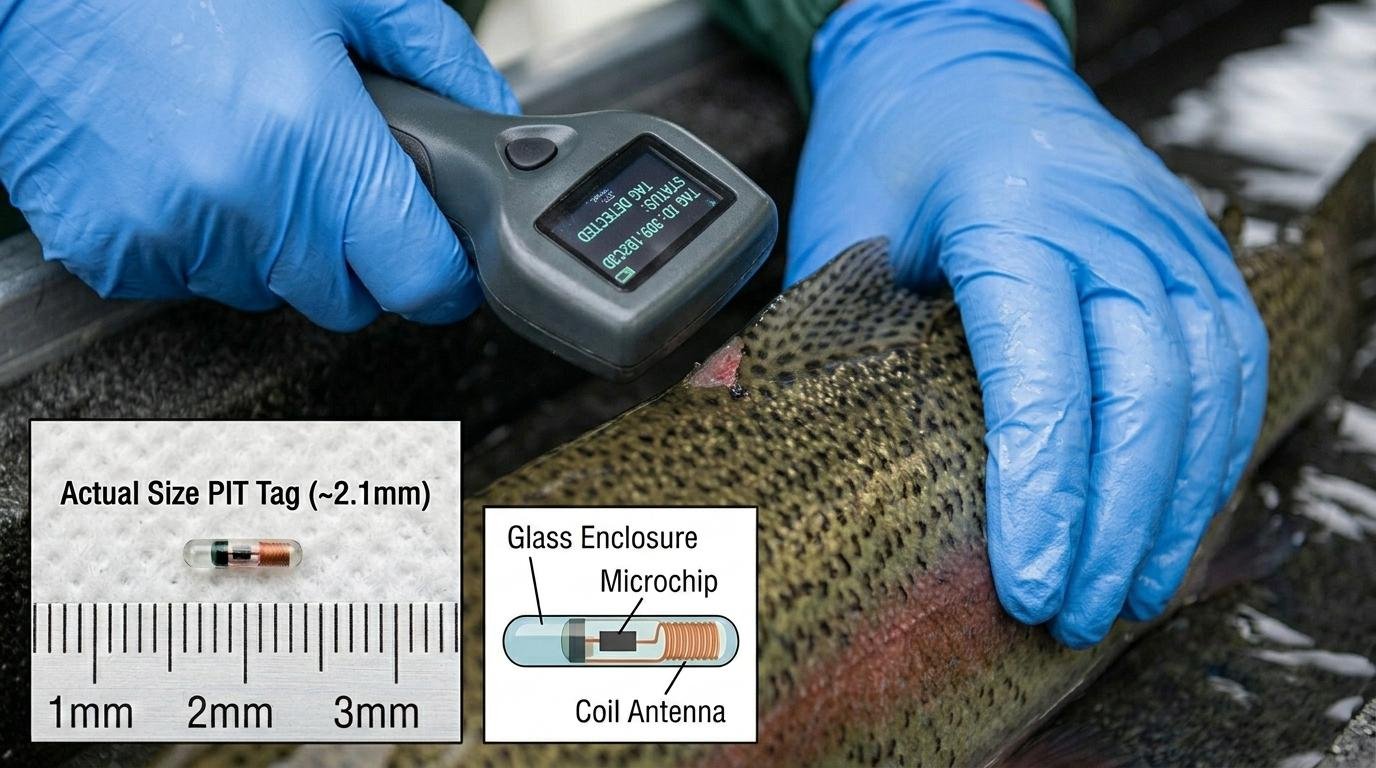
Introduction: Two Paradigms for Wildlife Identification
The landscape of RFID tag reader technology has evolved into two distinct architectural paradigms, each optimized for fundamentally different operational contexts. Fixed installation systems — permanently or semi-permanently mounted at strategic monitoring locations — represent a "wait and detect" approach, continuously monitoring for tagged animals passing through defined detection zones. Handheld portable systems, by contrast, embody an "active search" paradigm, where researchers bring detection capability directly to individual animals in varied field locations.
Neither approach is universally superior. Instead, they occupy complementary niches within comprehensive wildlife tracking programs. Fixed systems excel at automated, long-term monitoring of movement corridors, providing temporal data on migration timing, passage rates, and population-level patterns. Handheld systems provide flexibility, enabling individual animal health assessment, mark-recapture studies in diverse habitats, and applications where permanent infrastructure is impractical or prohibited.
Understanding the technical capabilities, operational characteristics, cost structures, and strategic applications of each system type is essential for designing effective research programs and making informed equipment procurement decisions. This article provides a comprehensive comparative analysis of fixed and handheld RFID tag reader technologies, examining their respective strengths, limitations, and optimal deployment scenarios.
Fixed Installation Systems: Architecture and Capabilities
Core Components and System Architecture
A complete fixed PIT tag detection system comprises several integrated subsystems:
Reader electronics: The core processing unit that generates the electromagnetic interrogation field, receives and decodes tag responses, and manages data logging and communication. Fixed system readers typically feature:
-
Multiple channel capability — supporting 4 to 32 individual antenna inputs through time-division multiplexing
-
High-power RF amplifiers — capable of driving large antenna arrays with sufficient current (4–8 amperes RMS) to achieve extended read ranges
-
Onboard data storage — 1–16 GB of solid-state memory buffering detection records during communication interruptions
-
Industrial-grade construction — sealed NEMA-rated enclosures (NEMA 4X or IP66) protecting electronics from environmental exposure
-
Diagnostic telemetry — continuous monitoring of system voltage, current draw, antenna performance, and error conditions
Antenna arrays: Multiple antenna elements strategically positioned to create comprehensive detection zones. Common configurations include:
-
Pass-through tunnel antennas — rectangular or circular loops creating a detection zone that fish or animals must traverse
-
Vertical array antennas — multiple horizontal antennas stacked across the water column in streams or fish passages
-
Horizontal array antennas — multiple antennas arranged side-by-side across channel width
-
Three-dimensional grids — combining vertical and horizontal arrays for complete volumetric coverage
Power systems: Fixed installations require reliable long-term power, typically provided through:
-
Grid AC power with regulated DC power supplies at sites with electrical infrastructure
-
Solar panels (50–400 watts) with deep-cycle battery banks (100–400 amp-hours at 12V) for remote installations
-
Redundant power architecture with automatic switchover between primary and backup supplies
Communication infrastructure: Transmitting detection data to centralized databases via:
-
Ethernet/Internet at sites with network connectivity
-
Cellular modems (4G LTE or 5G) providing remote connectivity in areas with cell coverage
-
Satellite transceivers (Iridium, Globalstar) for truly remote locations beyond cellular range
-
Radio telemetry for line-of-sight links to base stations (typically VHF or UHF bands)
Environmental enclosures: Weather-resistant housing protecting electronic components while allowing antenna exposure to the aquatic environment. Materials include stainless steel, powder-coated aluminum, or heavy-duty polymer composites.
Performance Characteristics
Fixed systems achieve superior performance in several key metrics:
Detection efficiency: Multi-antenna arrays with overlapping coverage zones routinely achieve 96–99% detection efficiency for tagged animals passing through the monitored location. This far exceeds typical handheld performance (85–95%) due to:
-
Multiple redundant detection opportunities as animals move through overlapping antenna fields
-
Optimized antenna positioning based on detailed site characterization
-
Continuous operation eliminating human timing/positioning errors
-
Higher power levels than battery-powered portable units
Continuous temporal coverage: Operating 24/7/365, fixed systems capture detections during periods when manual monitoring would be logistically impossible — nighttime, severe weather, high-flow events, winter conditions. This temporal completeness is critical for:
-
Migration timing analysis (identifying diel and seasonal patterns)
-
Behavioral studies (documenting nocturnal vs. diurnal activity)
-
Survival estimation (detecting animals across the full temporal spectrum of passage)
High-throughput capacity: Fixed systems can process large numbers of simultaneous detections. Modern multiplexing readers sequentially interrogate multiple antennas at rates of 40–100 complete cycles per second, enabling detection of hundreds of tagged animals per hour at high-density migration bottlenecks.
Data richness: Detection records include precise timestamps (typically synchronized to GPS time servers for ±1 second accuracy), antenna-specific location data (identifying which specific antenna detected each tag), and signal strength metrics that can provide supplementary information on tag position and orientation.
Strategic Applications
Fixed systems are optimally deployed in scenarios characterized by:
Defined migration corridors: Locations where animals must pass through predictable, geographically constrained routes:
-
Fish ladders and passage structures at dams
-
Culverts and bridge crossings on stream systems
-
Migration corridors used by terrestrial wildlife (e.g., fence-line gaps, road crossings)
Long-term monitoring programs: Multi-year studies where installation investment can be amortized across many field seasons. The Columbia Basin PIT tag network includes installations operated continuously since the early 1990s, accumulating decades of data.
Population-level monitoring: Programs focused on aggregate metrics (total passage counts, run timing distributions, population trends) rather than individual animal tracking.
Regulatory compliance: Installations providing data required for environmental compliance monitoring, such as fish passage effectiveness at hydropower facilities regulated under Federal Energy Regulatory Commission (FERC) licenses or Endangered Species Act biological opinions.
Remote locations: Sites where personnel access is difficult, dangerous, or seasonally impossible, but where solar/battery power and satellite communication enable year-round automated operation.
Cost Structure
Fixed installation economics involve substantial upfront capital investment offset by relatively low ongoing operational costs:
Initial installation costs:
-
Small single-antenna system: $8,000–$15,000
-
Medium multi-antenna array (8–12 antennas): $25,000–$45,000
-
Large complex installation (16–32 antennas, redundant systems): $60,000–$120,000+
-
Civil engineering and site preparation: $5,000–$50,000+ depending on site complexity
Annual operating costs:
-
Maintenance visits (cleaning, calibration, component inspection): $1,500–$5,000
-
Cellular/satellite communication service: $300–$1,200
-
Battery replacement (every 3–5 years): $500–$2,000
-
Component repairs and upgrades: $1,000–$3,000
Cost per detection: For high-volume sites processing tens of thousands to millions of detections annually, the per-detection cost can be extremely low (often <$0.01 per detection) once initial installation costs are amortized over 5–10 years of operation.
Handheld Portable Systems: Architecture and Capabilities
Core Components and System Architecture
Portable RFID tag readers integrate all functional components into a compact, field-portable package:
Integrated reader/antenna unit: Combining RF generation, signal processing, antenna, and user interface in a single handheld device. Modern designs weigh 0.3–1.2 kg and feature:
-
Battery power — rechargeable lithium-ion or LiFePO₄ packs providing 4–12 hours of continuous operation
-
Sealed construction — IP67 or IP68 waterproof ratings enabling submersion and operation in precipitation
-
Ruggedized enclosures — shock-resistant polymer or rubberized housings protecting against drops and impacts
-
Ergonomic design — contoured grips, balanced weight distribution, and accessible controls for extended handheld use
Display and user interface: Integrated LCD or OLED displays (2.5–5 inch diagonal) with:
-
Real-time tag code display during reading
-
Data entry screens for supplementary field data (species, location, biometrics)
-
Menu-driven configuration and settings access
-
Backlit displays for low-light operation
Data logging and connectivity:
-
Onboard storage — 2,000 to 100,000+ detection records with associated metadata
-
GPS integration — automatic coordinate logging with each detection (accuracy 2–10 meters depending on GPS quality)
-
Wireless data transfer — Bluetooth, Wi-Fi, or USB connectivity for downloading data to computers or mobile devices
-
Real-time data synchronization — Some advanced units upload data directly to cloud databases via cellular connection
Antenna configurations:
-
Integrated panel antennas — Built-in antennas (typically 8–15 cm diameter) providing read ranges of 8–20 cm
-
External antenna capability — Connector ports enabling attachment of specialized antennas:
-
Pole antennas for extended reach (30–50 cm) for reading tags without handling animals
-
Submersible probe antennas for underwater reading in tanks, ponds, or shallow streams
-
Large panel antennas for pass-through reading at temporary field installations
-
Performance Characteristics
Portable systems balance performance against the constraints of battery power and compact size:
Detection efficiency: Properly used handheld readers achieve 85–95% detection efficiency for tags within their read range. Lower efficiency compared to fixed systems results from:
-
Operator variability — Inconsistent positioning, orientation, and dwell time affect detection probability
-
Single-read-opportunity limitation — Unlike fixed arrays providing multiple detection chances, handheld reading typically involves a single scan per animal
-
Lower power levels — Battery constraints limit antenna drive current compared to AC-powered fixed systems
Read range: As discussed previously, typical handheld read ranges are 8–20 cm for integrated antennas, 15–30 cm for external pole antennas. This necessitates close approach to tagged animals, often requiring capture and handling.
Operational flexibility: The defining advantage of portables is their deployment flexibility:
-
Diverse habitat access — Rocky streams, shallow wetlands, remote backcountry locations, temporary study sites
-
Rapid deployment — No installation required; operational immediately upon arrival at a site
-
Multi-site capability — Single unit serves multiple study locations and field crews
-
Recapture efficiency — Enables identification without euthanizing animals (critical advantage over coded wire tags)
Data collection versatility: Modern handhelds function as integrated field data collection platforms, recording not just tag codes but also:
-
Species identification
-
Biometric measurements (length, weight, condition factor)
-
Sample collection records (scale samples, genetic tissue, otoliths)
-
Behavioral observations
-
Environmental conditions
-
Photographic documentation (some units include integrated cameras)
VodaIQ provides advanced handheld systems with comprehensive data management integration, enabling seamless field-to-database workflows.
Strategic Applications
Handheld systems are optimal for:
Mark-recapture studies: Active capture and re-identification of previously tagged individuals to estimate survival, growth rates, and movement patterns using classical mark-recapture statistical methods.
Health assessment and sampling: Programs requiring physical examination, measurement, or tissue sampling at the time of identification. The ability to identify individuals enables tracking of individual health trajectories over time.
Distributed populations: Species not concentrated at migration bottlenecks but distributed across extensive habitat areas (e.g., resident stream fish, pond-dwelling amphibians, terrestrial wildlife).
Short-term or pilot studies: Research programs with limited duration or exploratory objectives where permanent installation investment cannot be justified.
Multi-species programs: Studies involving numerous species, each requiring different monitoring approaches, where portable equipment provides the flexibility to adapt to varied field conditions.
Locations prohibiting permanent infrastructure: Wilderness areas, protected landscapes, or private properties where installation of permanent monitoring equipment is prohibited or impractical.
Emergency response: Rapid deployment capability for investigating fish kills, documenting mass migration events, or responding to management emergencies requiring immediate data collection.
Cost Structure
Handheld reader economics involve lower initial investment but higher per-detection costs for large-scale programs:
Equipment costs:
-
Entry-level basic readers: $300–$800
-
Mid-range professional handhelds: $1,500–$4,500
-
High-end units with advanced features: $5,000–$8,000
-
Specialized external antennas and accessories: $200–$1,500
Operational costs:
-
Personnel time (the dominant cost factor) — typically 2–10 minutes per animal for capture, handling, reading, and data recording
-
Battery replacement: $75–$200 every 2–3 years
-
Maintenance and calibration: $200–$500 annually
-
Software licensing (for advanced data management platforms): $200–$600 annually
Cost per detection: For small-to-moderate volume programs (hundreds to low thousands of detections annually), handheld systems provide excellent cost-effectiveness. For very large programs (tens of thousands of detections), the labor costs dominate and can exceed the total cost of fixed system alternatives.
Comparative Performance Analysis
Detection Efficiency Comparison
|
System Type |
Typical Efficiency |
Factors Affecting Efficiency |
|
Fixed multi-antenna array |
96–99% |
Antenna coverage, flow velocity, debris loading |
|
Fixed single-antenna |
85–93% |
Tag orientation, fish behavior, water conductivity |
|
Handheld professional |
85–95% |
Operator skill, tag access, read time allocated |
|
Handheld basic |
75–85% |
Read range limitations, orientation sensitivity |
Read Range Comparison
|
System Type |
Standard 12mm Tag |
Miniature 8mm Tag |
Environmental Sensitivity |
|
Fixed large array |
25–40 cm |
12–20 cm |
Moderate (tuning compensates) |
|
Fixed standard antenna |
15–30 cm |
8–15 cm |
Moderate |
|
Handheld external antenna |
15–25 cm |
8–12 cm |
High (battery voltage affects range) |
|
Handheld integrated antenna |
8–15 cm |
4–8 cm |
High |
Temporal Coverage Comparison
Fixed systems: 24/7/365 continuous operation with >98% uptime (downtime limited to maintenance windows and equipment failures)
Handheld systems: Discontinuous operation limited to periods of active field work — typically seasonal field campaigns, specific sampling events, or irregular monitoring visits
This temporal limitation means handheld-based programs inevitably miss portions of the population (animals present during non-sampling periods), introducing temporal sampling bias that must be addressed through statistical methods or study design.
Data Quality and Completeness
Fixed systems provide:
-
Comprehensive temporal data — capturing all passage events
-
Precise timestamps — GPS-synchronized to ±1 second
-
Consistent recording — eliminating transcription errors inherent in manual data entry
-
Limited supplementary data — detection only; no biological measurements unless coupled with separate capture facilities
Handheld systems provide:
-
Rich biological data — measurements, condition assessment, samples
-
Incomplete temporal coverage — sampling events separated by days, weeks, or months
-
Potential transcription errors — if data are manually recorded (mitigated by electronic data capture systems)
-
Individual animal resolution — ability to track individual-level traits over time
Hybrid Deployment Strategies
Sophisticated research programs increasingly employ integrated monitoring strategies combining both system types:
Strategy 1: Fixed Detection with Handheld Validation
Deploy fixed systems for continuous population monitoring while using handheld readers to:
-
Validate fixed system performance through known-tag releases
-
Conduct detailed biological sampling on a subset of detected individuals
-
Investigate detected individuals showing unusual patterns (e.g., extended residency, erratic movements)
Example: Columbia Basin salmonid programs use fixed detection at dams for migration monitoring, with handheld readers deployed at spawning grounds to identify returning adults and assess reproductive success.
Strategy 2: Handheld Tagging with Fixed Detection Endpoints
Use handheld readers during initial tagging operations to verify tag functionality and record biological data at tagging, then rely on fixed detection systems for subsequent automated monitoring.
Example: Juvenile salmonids tagged at hatcheries using handheld readers are subsequently detected at automated arrays during downstream migration, providing survival estimates and migration timing data without further handling.
Strategy 3: Temporary Fixed Installations
Deploy portable "fixed" systems — self-contained units with integrated power and antennas that can be installed rapidly at a site, operated for weeks to months, then recovered and redeployed elsewhere. This approach provides:
-
The detection efficiency and temporal coverage of fixed systems
-
The deployment flexibility of portable equipment
-
Cost-effectiveness for rotating among multiple study sites
Example: Temporary installations in tributary streams during spawning season capture spawning migration timing, then equipment is recovered and moved to different tributaries in subsequent years.
Strategy 4: Multi-Scale Integration
Combine system types at different spatial scales within a hierarchical monitoring framework:
-
Regional scale: Fixed systems at major migration nodes (dams, river mouths, passage bottlenecks)
-
Watershed scale: Temporary fixed or portable systems at tributary confluences
-
Local scale: Handheld readers for detailed site-specific studies
This architecture provides comprehensive spatial coverage while concentrating resources at the most critical monitoring locations.
Decision Framework: Selecting the Appropriate System
The choice between fixed and handheld systems depends on multiple factors:
Research Objectives
If the primary goal is:
-
Population abundance estimation → Fixed systems (provide unbiased temporal coverage)
-
Migration timing analysis → Fixed systems (capture complete temporal distribution)
-
Individual growth and survival → Handheld systems (enable repeat measurements)
-
Behavioral ecology → Fixed systems (continuous observation) OR handheld systems with telemetry (detailed individual data)
-
Mark-recapture survival estimation → Either (statistical models accommodate both)
Site Characteristics
If the site features:
-
Constrained migration corridor → Fixed systems (high efficiency possible)
-
Distributed habitat → Handheld systems (greater spatial flexibility)
-
Permanent access → Either system viable
-
Seasonal/restricted access → Fixed systems (operate during inaccessible periods)
-
Grid power available → Fixed systems (eliminates power management challenges)
-
Remote/off-grid location → Fixed with solar (if long-term) OR handheld (if short-term)
Budget Constraints
If budget is:
-
Capital-limited, operating-flexible → Handheld systems (low initial cost, accept higher labor costs)
-
Capital-available, operating-limited → Fixed systems (high initial investment, minimal labor)
-
Very constrained → Entry-level handhelds (provides basic capability)
-
Generous/grant-funded → Integrated system (both types deployed strategically)
Program Duration
If program duration is:
-
<1 year → Handheld systems (insufficient time to justify fixed installation)
-
1–3 years → Either (depends on detection volume and budget)
-
>3 years → Fixed systems (cost-effective over long term for high-volume sites)
-
Indefinite/permanent → Fixed systems (essential for long-term monitoring networks)
Emerging Technologies Blurring the Distinction
Recent technological developments are creating hybrid systems that combine advantages of both paradigms:
Portable Fixed Systems
Self-contained units integrating reader, antenna array, battery, and solar panel in a transportable package weighing 10–25 kg. These systems can be:
-
Hand-carried or backpacked to remote locations
-
Installed in 1–2 hours without specialized tools
-
Operated autonomously for weeks to months
-
Retrieved and redeployed seasonally
Applications: Seasonal spawning stream monitoring, temporary obstruction assessment, emergency response deployments.
Network-Connected Handhelds
Advanced portable readers with integrated cellular connectivity that upload detection data in real-time to cloud databases. This provides:
-
Immediate data availability for adaptive management decisions
-
Elimination of data loss risk (no buffering in device memory)
-
Multi-user coordination (researchers see each other's detections in real-time)
-
Quality control alerts (system flags unusual detections for immediate verification)
Drone-Deployed Antenna Systems
Experimental systems mounting PIT tag antennas on drones (UAVs) for aerial scanning of tagged animals. While still developmental, these systems could:
-
Scan shallow water bodies without entering the water
-
Cover large spatial areas rapidly
-
Access physically inaccessible terrain
-
Combine tag detection with aerial imagery
Early prototypes have demonstrated feasibility for detecting large (23 mm) tags from altitudes of 1–3 meters.
Conclusion: Complementary Tools in a Comprehensive Monitoring Strategy
The fixed versus handheld comparison is not a zero-sum choice but rather a strategic decision about resource allocation within a comprehensive monitoring framework. Each system type excels in specific applications, and the most sophisticated wildlife tracking programs deploy both in complementary roles.
Fixed systems provide the temporal resolution, detection efficiency, and automation essential for population-level monitoring and long-term trend analysis. Handheld systems provide the flexibility, individual-level data richness, and cost-effectiveness essential for detailed biological studies and spatially distributed populations.
As technology continues to evolve — with portable systems becoming more capable and fixed systems becoming more flexible — the distinction between categories will progressively blur. But the fundamental strategic question will remain: Where should we concentrate our limited monitoring resources to extract maximum scientific insight? Answering that question thoughtfully, based on clear understanding of each technology's capabilities and limitations, is the hallmark of effective wildlife research program design.
Categorieën
Read More
Nouveau Héros Défensif Un nouveau héros vient d’intégrer la DCE sur FC 26, et cette fois, c’est le défenseur français Dayot Upamecano en version flashback qui fait son apparition. Ce joueur incarne la solidité et la modernité dans la ligne arrière. Doté d’une stature impressionnante, Upamecano est reconnu...

Many users spend significant amounts of their mobile data watching videos on popular streaming platforms like Netflix and Hulu, which typically count towards their monthly data limits. However, T-Mobile is offering a solution that allows customers to enjoy these services without worrying about data consumption. Through a new initiative known as the “Binge On” program, T-Mobile has...
AI in Financial Planning Market Summary “The global AI in Financial Planning Market is expected to reach to USD 53.3 billion by 2032, growing at a CAGR of 20.3% during 2025 to 2032” The TrendBridge Insights Research report, “Global AI in Financial Planning Market Report 2025 – Future Opportunities, Latest Trends, In-depth Analysis, and Forecast To 2032”,...
Barley's versatile attack options make him a formidable presence on the battlefield, especially when used to divide enemy formations. By simultaneously targeting two sides of opponents, he can force them to retreat or reposition vertically, opening gaps that can be exploited by teammates. This dual-pressure tactic often results in enemies either fleeing into danger or moving into barley's line...
Running a business in a busy city like Chicago means cleanliness is not optional. From high foot traffic to strict health expectations, every workspace needs consistent care. Commercial Cleaning service in Chicago, IL plays a vital role in helping businesses maintain a professional image while protecting employees and customers. Clean offices, retail spaces, and commercial buildings...
