India Industrial Automation Market Size and Forecast 2026–2034
India’s Industrial Automation Market is poised for exponential expansion over the next decade. According to Renub Research, the market is projected to grow from US$ 3.64 billion in 2025 to US$ 13.65 billion by 2034, registering a remarkable CAGR of 15.82% from 2026 to 2034.
This rapid growth reflects India’s accelerating shift toward digital manufacturing, advanced robotics, smart sensors, and AI-driven operational systems. With expanding electronics, automotive, pharmaceuticals, and heavy engineering sectors—combined with strong government backing through initiatives like Make in India and Production-Linked Incentive (PLI) schemes—industrial automation is becoming central to India’s global manufacturing competitiveness.
Download Free Sample Report:https://www.renub.com/request-sample-page.php?gturl=india-industrial-automation-market-p.php
India Industrial Automation Industry Overview
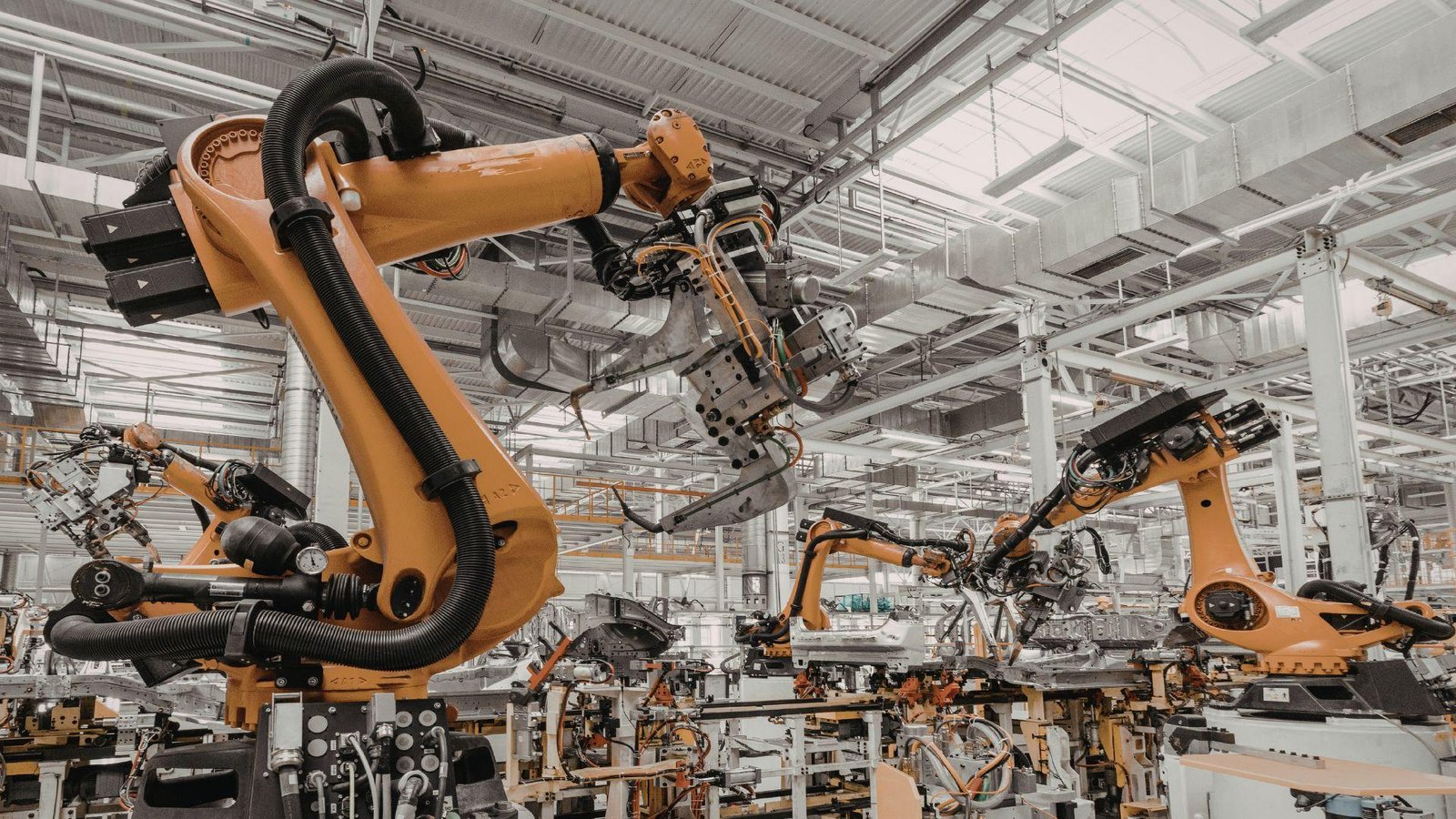
Industrial automation in India involves the deployment of robotics, industrial IoT (IIoT), artificial intelligence (AI)-based control systems, machine vision, advanced sensors, and digital platforms to enhance manufacturing and operational efficiency.
Automation enables industries to:
-
Reduce manual intervention
-
Improve product precision and consistency
-
Minimize downtime
-
Enhance workplace safety
-
Lower long-term operational costs
As India progresses toward Industry 4.0, manufacturers are increasingly implementing smart factory concepts such as digital twins, predictive maintenance systems, cloud-connected equipment, and real-time performance analytics.
Automation adoption is particularly strong across sectors including automotive, FMCG, chemicals, electronics, aerospace, pharmaceuticals, and heavy engineering—marking a transformative shift in India’s industrial ecosystem.
Key Growth Drivers of the India Industrial Automation Market
Expansion of Semiconductor and Electronics Manufacturing
India’s strategic push to develop a domestic semiconductor and electronics manufacturing ecosystem is a major catalyst for automation adoption.
In May 2025, the Indian Union Cabinet approved the sixth semiconductor facility under the India Semiconductor Mission—a joint venture between HCL and Foxconn near Jewar airport. The facility will manufacture display driver chips with a monthly capacity of 36 million units and 20,000 wafers, backed by an investment of INR 3,700 crore.
Such advanced facilities require contamination-free environments, robotics-enabled material handling, intelligent process control, and real-time monitoring systems. Automation ensures traceability, quality control, and precision at high production volumes.
As India strengthens its semiconductor capabilities, automation demand will surge across upstream and downstream electronics segments.
Shift Toward Open and Software-Defined Automation
India’s industrial ecosystem is transitioning from rigid, proprietary automation systems to flexible, software-led architectures.
In May 2025, Schneider Electric introduced its Open Automation Movement, promoting interoperable and vendor-neutral automation platforms.
This approach allows:
Open, scalable architectures are critical for industries seeking agility and faster digital transformation. Automotive, FMCG, and heavy manufacturing sectors are rapidly adopting interoperable systems to support predictive analytics and AI-based monitoring.
Digital Transformation and Sustainability Focus
Sustainability-driven manufacturing is reshaping India’s automation investments. Industries are deploying AI-powered analytics, smart sensors, and energy-optimized control systems to align with Environmental, Social, and Governance (ESG) frameworks.
In December 2024, ABB Ltd partnered with PwC India to support manufacturers in digital transformation and ESG integration.
Automation helps businesses:
-
Monitor emissions and energy consumption
-
Reduce waste and downtime
-
Improve safety standards
-
Enhance supply chain transparency
As global value chains demand greener production standards, Indian manufacturers are increasingly investing in digital twins, real-time analytics, and cloud-based asset monitoring.
Challenges in the India Industrial Automation Market
High Investment Costs and SME Adoption Barriers
While large enterprises lead automation adoption, small and medium enterprises (SMEs)—which form the backbone of India’s industrial base—often face financial constraints.
High upfront costs related to robotics, PLC systems, integration services, workforce training, and cybersecurity create barriers. Many SMEs remain uncertain about ROI timelines and technology implementation strategies.
Affordable, modular automation models and financing mechanisms are critical to broadening adoption across India’s industrial spectrum.
Workforce Skill Gaps
Automation requires skilled professionals proficient in robotics programming, system integration, IIoT platforms, and AI analytics.
India faces a shortage of technicians and engineers trained in Industry 4.0 systems. Limited industry-academia collaboration and insufficient hands-on training programs further widen the skill gap.
Without workforce upskilling, industries risk underutilizing automation investments and slowing digital transformation momentum.
State-Level Market Insights
Maharashtra Industrial Automation Market
Maharashtra leads India’s automation adoption due to its strong automotive, pharmaceuticals, chemicals, and electronics base. Cities like Mumbai and Pune host major manufacturing hubs implementing robotics, PLC systems, SCADA platforms, and AI-driven predictive maintenance.
Industrial corridors and smart factory initiatives further strengthen demand for advanced automation technologies.
Tamil Nadu Industrial Automation Market
Tamil Nadu’s industrial strength in automotive, electronics, textiles, and heavy engineering drives automation investments. Chennai, Sriperumbudur, and Hosur are key manufacturing clusters adopting robotics, high-speed assembly automation, and advanced inspection systems.
Smart sensors, MES platforms, and AI-enabled analytics are gaining widespread traction across factories.
Karnataka Industrial Automation Market
Karnataka benefits from its robust technology ecosystem centered in Bengaluru. Aerospace, machine tools, and electronics manufacturing industries are implementing digital twins, IoT platforms, and smart manufacturing solutions.
The presence of global automation firms accelerates innovation and deployment of Industry 4.0 technologies.
Uttar Pradesh Industrial Automation Market
Uttar Pradesh is rapidly expanding its manufacturing ecosystem through electronics clusters and industrial corridors, particularly in the Noida–Greater Noida region.
Automation adoption is increasing in electronics, food processing, textiles, and logistics sectors, driven by IoT-based monitoring systems and automated packaging lines.
Recent Developments in the India Industrial Automation Market
-
September 2025: Schneider Electric acquired the remaining 35% stake in its India joint venture for INR 499,000 million, strengthening its domestic automation presence.
-
July 2025: Sonepar India partnered with Siemens AG to expand distribution of automation solutions across Tier-2 and Tier-3 regions.
-
December 2024: Rockwell Automation announced plans to make India a major global manufacturing hub.
-
October 2024: Honeywell International Inc. collaborated with Chevron to develop AI-enabled refinery optimization solutions.
-
August 2024: Neilsoft launched a suite of Industry 4.0 solutions supporting digital factory transformation across India.
Market Segmentation
By Component:
Hardware, Software, Services
Hardware Includes:
Industrial Sensors, Machine Vision Systems, Field Instruments, Industrial Robots, Human-Machine Interfaces (HMI), Industrial PCs
Software Includes:
Manufacturing Execution Systems (MES), Industrial Safety, Plant Asset Management, SCADA, PLC, Distributed Control Systems (DCS)
Services Include:
Project Engineering & Installation, Maintenance & Support, Consulting, Operational Services
By End User:
Manufacturing, Automotive, Food & Beverage, Healthcare, Oil & Gas, Chemicals, Energy & Utilities, Mining & Metals, Aerospace & Defense
Top States:
Maharashtra, Tamil Nadu, Karnataka, Uttar Pradesh, Gujarat, West Bengal, Rajasthan, Telangana, Andhra Pradesh, Madhya Pradesh
Competitive Landscape
The India Industrial Automation Market features strong competition among global technology leaders and domestic engineering firms. Key players include:
Companies are assessed across five viewpoints: overview, key persons, recent developments & strategies, SWOT analysis, and revenue performance.
Final Thoughts
India’s Industrial Automation Market is entering a high-growth phase, projected to nearly quadruple in value by 2034. The convergence of Industry 4.0 technologies, semiconductor expansion, sustainability mandates, and government-led digital initiatives is transforming India into a modern manufacturing powerhouse.
Although capital intensity and workforce skill gaps remain challenges, accelerating investments and policy support are driving adoption across major industrial states.
With a CAGR of 15.82%, India stands among the fastest-growing industrial automation markets globally—positioning itself as a key player in the future of smart manufacturing.