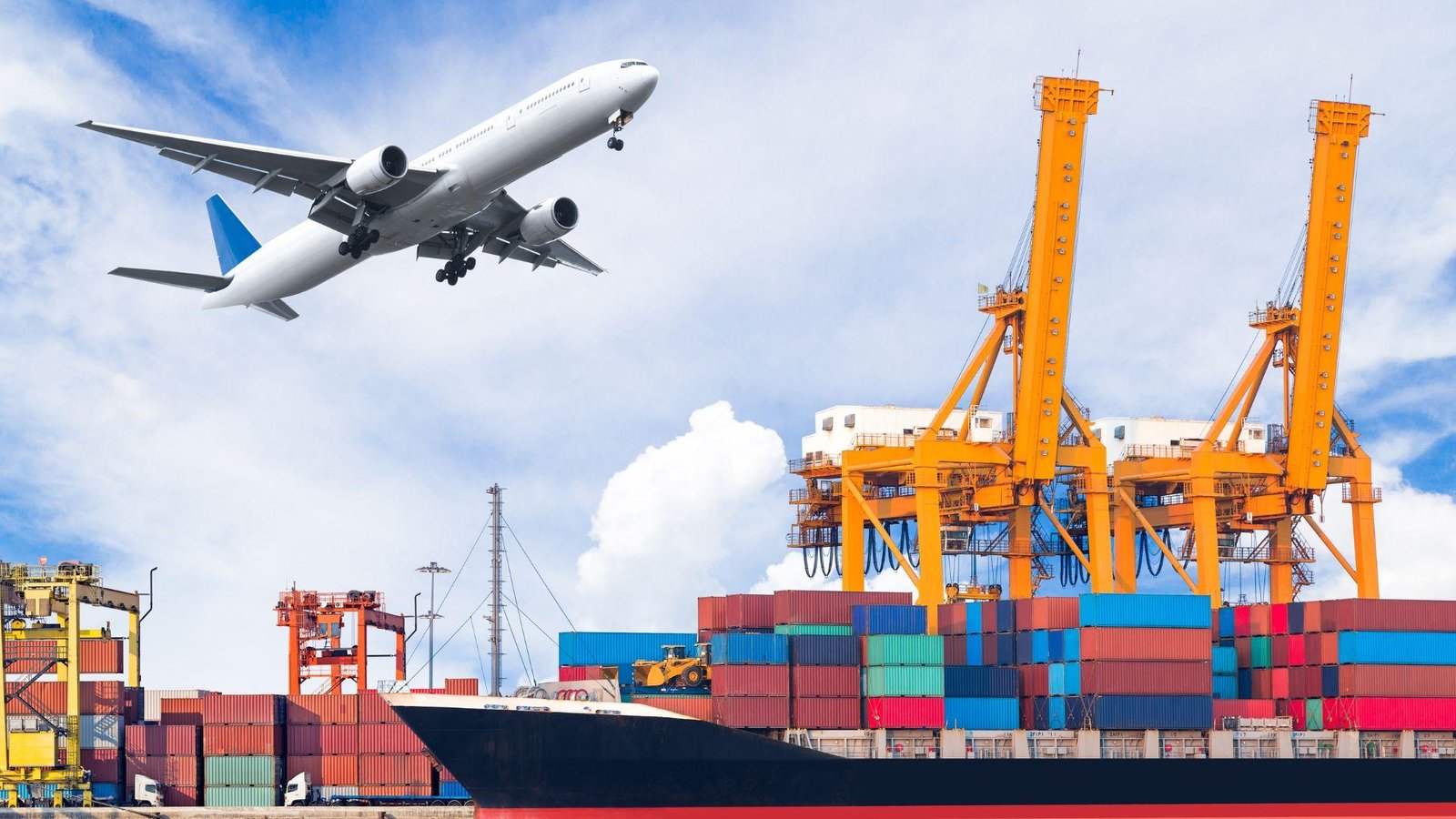
The United States sea freight forwarding market is entering a phase of steady transformation, shaped by evolving trade dynamics, integrated logistics models, and supply chain modernization. According to Renub Research, the market is projected to grow from US$ 22.68 billion in 2025 to US$ 34.85 billion by 2034, expanding at a CAGR of 4.89% during 2026–2034.
This growth trajectory reflects the United States’ continued dominance in global trade, rising containerized cargo volumes, and the increasing reliance of businesses on third-party logistics providers to manage complex international supply chains efficiently
Overview of the United States Sea Freight Forwarding Market
Sea freight forwarding refers to the coordination and management of ocean-based cargo shipments between international exporters and importers. Freight forwarders act as intermediaries between shippers, shipping lines, port authorities, customs agencies, and inland transportation providers. Their services typically include cargo booking, documentation, customs clearance coordination, warehousing, tracking, and multimodal transportation arrangements.
Ocean freight remains the most economical transportation mode for large-volume, heavy, or non-urgent cargo. It supports multiple shipment formats such as:
-
Full Container Load (FCL)
-
Less-than Container Load (LCL)
-
Bulk and breakbulk shipments
The United States, with its extensive coastline along the Atlantic and Pacific Oceans and access to the Gulf of Mexico, depends heavily on maritime logistics. Major port hubs serve as gateways for imports of consumer goods, machinery, electronics, textiles, pharmaceuticals, and raw materials. Simultaneously, U.S. exports—including agricultural products, industrial machinery, and chemicals—rely on efficient sea freight operations.
The expansion of global sourcing strategies, combined with rising e-commerce and manufacturing imports, continues to solidify the importance of freight forwarding services in the U.S. logistics ecosystem.
Download Free Sample Report:
1. Expansion of International Trade and Import Volumes
International trade remains the primary engine driving growth in the U.S. sea freight forwarding industry. The United States consistently ranks among the largest importers and exporters globally. Ocean freight provides unmatched economies of scale for long-distance, high-volume shipments, making it indispensable for global commerce.
Sea freight forwarders manage the operational complexity associated with:
As companies diversify sourcing locations across Asia, Latin America, and Europe, freight forwarding firms play a strategic role in ensuring continuity and cost efficiency. Sustained import-export growth directly strengthens demand for maritime logistics services.
2. Growth of Retail, E-commerce, and FMCG Supply Chains
The rapid growth of retail, fast-moving consumer goods (FMCG), and online commerce has significantly increased containerized imports into the United States. Retailers depend on ocean freight to move bulk inventory from overseas manufacturing hubs to domestic distribution centers.
Sea freight forwarding companies assist retailers by:
-
Managing seasonal inventory surges
-
Coordinating multi-origin shipments
-
Reducing freight costs through consolidation
-
Ensuring timely customs clearance
-
Facilitating distribution to fulfillment centers
Omnichannel retailing and private-label expansion further increase reliance on predictable ocean shipping schedules. As product variety expands and consumer expectations rise, integrated logistics solutions become even more essential.
3. Increasing Demand for Integrated Logistics Services
Modern businesses prefer end-to-end logistics partnerships rather than fragmented transportation solutions. As a result, freight forwarders are expanding service portfolios to include:
-
Inland trucking and rail coordination
-
Warehousing and inventory management
-
Customs brokerage
-
Real-time cargo tracking
-
Value-added packaging and labeling
Integrated logistics enhances supply chain visibility and reduces operational complexity. Companies benefit from working with a single logistics partner capable of managing global shipments from origin to final delivery.
Digital transformation is also reshaping the industry. Technology-enabled freight booking platforms, AI-powered freight matching systems, and automated documentation processes are improving efficiency and reducing delays. This shift toward digitization strengthens competitiveness and customer retention.
Market Challenges
1. Port Congestion and Infrastructure Constraints
Port congestion remains one of the most pressing challenges in the U.S. sea freight forwarding sector. Surges in cargo volumes, labor shortages, and infrastructure bottlenecks can lead to shipment delays and cost overruns.
Consequences of congestion include:
-
Extended transit times
-
Increased demurrage and detention fees
-
Disrupted inventory planning
-
Reduced supply chain reliability
Freight forwarders must invest in alternative routing strategies, inland coordination, and proactive cargo management to mitigate risks during peak seasons.
2. Freight Rate Volatility and Cost Pressures
Ocean freight rates are subject to fluctuations influenced by fuel prices, capacity constraints, global demand shifts, and geopolitical factors. Sudden rate increases create uncertainty for shippers and complicate long-term contract negotiations.
Forwarders face the challenge of maintaining cost competitiveness while preserving margins. Smaller and mid-sized players are particularly vulnerable to financial and operational risks associated with rate volatility.
Segment Insights
Full Container Load (FCL) Market
The FCL segment remains a cornerstone of the U.S. sea freight forwarding industry. FCL shipments allow a single shipper to utilize an entire container, offering:
Manufacturers, wholesalers, and exporters prefer FCL for bulk commodities such as electronics, machinery, automotive components, and consumer goods. As international trade volumes rise, the FCL segment is expected to maintain steady expansion.
Transportation and Warehousing Services
The integration of ocean freight with inland transportation and warehousing services is transforming the competitive landscape. Freight forwarders increasingly operate distribution centers near major ports to facilitate:
This bundled service model enhances supply chain visibility and reduces transit delays. As companies prioritize logistics optimization, transportation and warehousing services continue to gain traction.
Retail and FMCG Vertical
Retail and FMCG industries are among the largest consumers of sea freight forwarding services. Bulk imports of apparel, electronics, household goods, and packaged foods rely on cost-efficient ocean transport.
Forwarders help retailers manage promotional cycles, seasonal demand fluctuations, and supplier coordination. Efficient maritime logistics ensures stable inventory levels while controlling operational costs.
Healthcare Segment
Although air freight is often preferred for urgent medical supplies, sea freight plays a critical role in transporting non-urgent medical equipment, consumables, and pharmaceutical inputs.
Freight forwarders ensure:
As healthcare manufacturing and imports expand, demand for compliant and reliable maritime logistics services continues to grow.
Textile Industry
The U.S. textile and apparel industry depends heavily on global sourcing. Sea freight provides an economical option for transporting fabrics, raw materials, and finished garments in high volumes.
Forwarders coordinate supplier shipments, customs clearance, and seasonal inventory cycles. Efficient logistics management is essential to prevent delays and stock shortages in fashion-driven markets.
Manufacturing Sector
Manufacturing represents a core vertical within the U.S. sea freight forwarding market. Companies import raw materials and export finished goods ranging from automotive parts to industrial machinery.
Sea freight enables manufacturers to maintain production continuity while optimizing logistics costs. Reliable container availability, documentation management, and multimodal transportation solutions strengthen this segment’s long-term demand.
Regional Market Insights
California
California remains a dominant force in the U.S. sea freight forwarding landscape due to its strategic Pacific coastline and extensive trade links with Asia. High container volumes, advanced port infrastructure, and strong retail and technology sectors drive sustained demand.
Efficient container handling and intermodal connectivity are key competitive advantages in this region.
New York
New York serves as a critical hub for transatlantic trade. Its proximity to major consumer markets supports steady import and export volumes across textiles, pharmaceuticals, and industrial goods.
Freight forwarders in this region emphasize compliance, reliability, and efficient cargo handling.
Washington
Washington’s export-oriented economy—driven by agriculture, forestry, and manufacturing—supports strong maritime logistics demand. Sea freight forwarding companies focus on export documentation and multimodal coordination.
New Jersey
New Jersey operates as a major logistics and distribution hub for the northeastern United States. Integrated services, including warehousing and last-mile delivery, make it a vital regional contributor to overall market growth.
Market Segmentation Overview
By Type
By Services
By Vertical
-
Retail and FMCG
-
Manufacturing
-
Consumer Appliances
-
Healthcare
-
Textile
-
Others
By Top States
California, Texas, New York, Florida, Illinois, Pennsylvania, Ohio, Georgia, New Jersey, Washington, North Carolina, Massachusetts, Virginia, Michigan, Maryland, Colorado, Tennessee, Indiana, Arizona, Minnesota, Wisconsin, Missouri, Connecticut, South Carolina, Oregon, Louisiana, Alabama, Kentucky, and Rest of United States.
Competitive Landscape
Leading companies operating in the U.S. sea freight forwarding market include:
-
Agility Logistics
-
Bolloré Logistics
-
C.H. Robinson Worldwide Inc.
-
CEVA Logistics
-
Deutsche Bahn AG
-
Deutsche Post AG
-
Expeditors International
-
Geodis
-
Hellmann Worldwide Logistics SE & Co. KG
-
Kerry Logistics Network Limited
These companies are evaluated based on overviews, key personnel, recent developments, SWOT analysis, revenue performance, and overall company positioning.
Final Thoughts
The United States sea freight forwarding market is poised for stable, long-term expansion. With Renub Research projecting growth from US$ 22.68 billion in 2025 to US$ 34.85 billion by 2034, the sector reflects the enduring strength of U.S. international trade and global supply chain integration.
While challenges such as port congestion and freight rate volatility persist, increasing trade volumes, retail expansion, manufacturing growth, and digital logistics transformation continue to reinforce the industry’s importance.
As businesses seek efficiency, reliability, and cost optimization in cross-border logistics, sea freight forwarders are evolving from transactional intermediaries into strategic supply chain partners—positioning the market for sustained growth through 2034.