


Comme des Garçons The Beautiful Rebellion of Fashion
In a world where fashion often follows predictable rhythms of trend and tradition, Comme des Garçons stands apart as a house built on beautiful defiance. Founded in 1969 by visionary designer Rei Kawakubo, the brand has consistently challenged the very definition of beauty, transforming the runway into a stage for radical thought and emotional expression. More than a fashion label, Comme des Garçons is an artistic philosophy one that dares to ask not what is fashionable, but what is possible.
From its earliest collections in Tokyo to its explosive Paris debut in 1981, Comme des Garçons disrupted conventional aesthetics. At a time when glamour meant polish and perfection, Kawakubo introduced silhouettes that were asymmetrical, distressed, and often monochromatic. Black once associated primarily with mourning or minimalism became her poetic language. The Western press initially described her work as “Hiroshima chic,” unable to comprehend garments that embraced holes, frayed edges, and exaggerated shapes. Yet within that discomfort lay the seed of admiration. Kawakubo was not designing for approval; she was designing to provoke thought.
Beauty, in the world of Comme des Garçons, is not delicate or decorative. It is complex, intellectual, and sometimes unsettling. Kawakubo’s garments frequently blur the boundaries between clothing and sculpture. Lumps and bumps reshape the body, challenging traditional ideas of proportion and femininity. Jackets may twist unexpectedly; dresses may appear unfinished. Each piece invites the wearer to question assumptions about symmetry, perfection, and desirability.
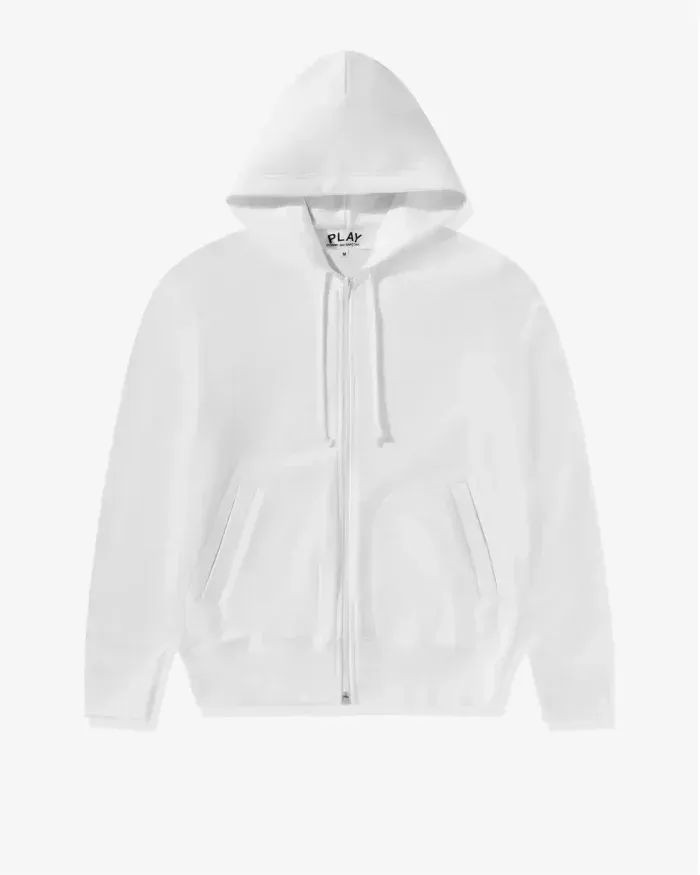
Despite its avant-garde core, Comme des Garçons has built a global empire that balances art and commerce with remarkable finesse. The brand’s diffusion lines, including Comme des Garçons Play recognizable by its iconic heart-with-eyes logo created by Polish artist Filip Pagowski have introduced a wider audience to Kawakubo’s world. The playful emblem has become one of the most recognizable symbols in contemporary streetwear, proving that radical design can coexist with accessibility.
Comme des Garçons has also redefined retail experience. Its concept store Dover Street Market, launched in London in 2004, transformed shopping into curated exploration. Rather than a conventional boutique, Dover Street Market presents fashion as installation art, housing both established luxury brands and emerging designers within ever-evolving interiors. It is not merely a store; it is a cultural laboratory where creativity thrives without hierarchy.
Collaboration has been another powerful instrument in the brand’s evolution. Over the decades, Comme des Garçons has partnered with companies ranging from Nike to Louis Vuitton, merging high fashion with street culture and heritage luxury. These collaborations are never superficial logo swaps; they are dialogues between identities. Each project reflects Kawakubo’s fascination with duality tradition and innovation, minimalism and excess, structure and chaos.
In 2017, the influence of Comme des Garçons Hoodie reached a monumental cultural milestone when the Metropolitan Museum of Art in New York dedicated its annual Costume Institute exhibition to Rei Kawakubo. The exhibition, titled “Rei Kawakubo/Comme des Garçons: Art of the In-Between,” positioned her among the rare living designers to receive such an honor. The show celebrated her ability to exist between opposites: fashion and anti-fashion, beauty and grotesque, past and future. It affirmed what the industry had long understood Kawakubo is not simply a designer, but a philosopher of form.
What makes Comme des Garçons truly beautiful is not merely its garments, but its courage. In an era driven by speed and social media approval, the brand remains fiercely independent. Kawakubo rarely explains her collections, preferring ambiguity over narrative clarity. She resists nostalgia and avoids repeating past successes. Each season begins again from zero, guided not by market research but by instinct.
The emotional power of Comme des Garçons lies in its refusal to conform. It invites its audience to embrace imperfection and complexity. To wear Comme des Garçons is to participate in a quiet rebellion a declaration that beauty need not be easy, flattering, or conventional. It can be challenging, cerebral, and deeply personal.
More than five decades after its founding, Comme des Garçons continues to shape the future of fashion. Young designers cite Kawakubo as a foundational influence, inspired by her fearless experimentation. The brand’s impact extends beyond clothing into art, architecture, and cultural theory. It stands as proof that fashion, when approached with integrity and imagination, can transcend commerce to become a form of profound artistic expression.
In the end, Comme des Garçons is not about trends or seasons. It is about vision. It is about the poetry of black fabric, the drama of asymmetry, the elegance of disruption. It is about redefining what beautiful means and having the courage to stand by that definition, even when the world does not yet understand it.
Categorii
Citeste mai mult
Nail fungus is more than just a cosmetic concern—it’s a persistent condition that can affect confidence, comfort, and overall foot and hand health. Discolored, brittle, thickened, or crumbling nails are often signs of a deeper fungal imbalance that many people struggle to eliminate completely. Over-the-counter creams and harsh treatments may offer temporary relief, but they often...

Neue Kapitel in Honkai Star Rail In Honkai Star Rail öffnet sich das Kapitel „Blumen in den stillen Tälern“, das den Handlungsstrang der Flame Chasers weiterführt. Hierbei geht es um die Bemühungen, eine alte Prophezeiung zu erfüllen und die Geheimnisse um die Titankerne Thanatos und Kerkes zu lüften. Die Hauptfiguren dieser Missionen sind Anax, ein...

Don't Miss This New Thursday Release: A Crime Comedy Gem on Netflix Every Thursday, Netflix unveils its most anticipated content, making it the unofficial highlight of the streaming week for many subscribers. This tradition continues with their latest release that has quickly become the talk of the streaming world. February 12th marked the debut of "How to Get to Heaven from Belfast," a series...
Netherlands Bicycle Market Size & Forecast (2025–2033) According To Renub Research The Netherlands bicycle market is one of the most mature and structurally supported bicycle markets in the world, deeply rooted in national culture, urban planning, and sustainability goals. Cycling is not merely a recreational activity in the country but a fundamental mode of transportation used daily...

A recent leak about Honkai: Star Rail hints at an upcoming event in version 3.2 that will significantly streamline the process of acquiring relics and planar ornaments. These items are essential for character customization and optimization within the game. Relics provide various bonuses, including set effects like two-piece or four-piece bonuses, which players can combine for different...