Optimizing High-Speed Spindles with 70 Angular Contact Ball Bearing
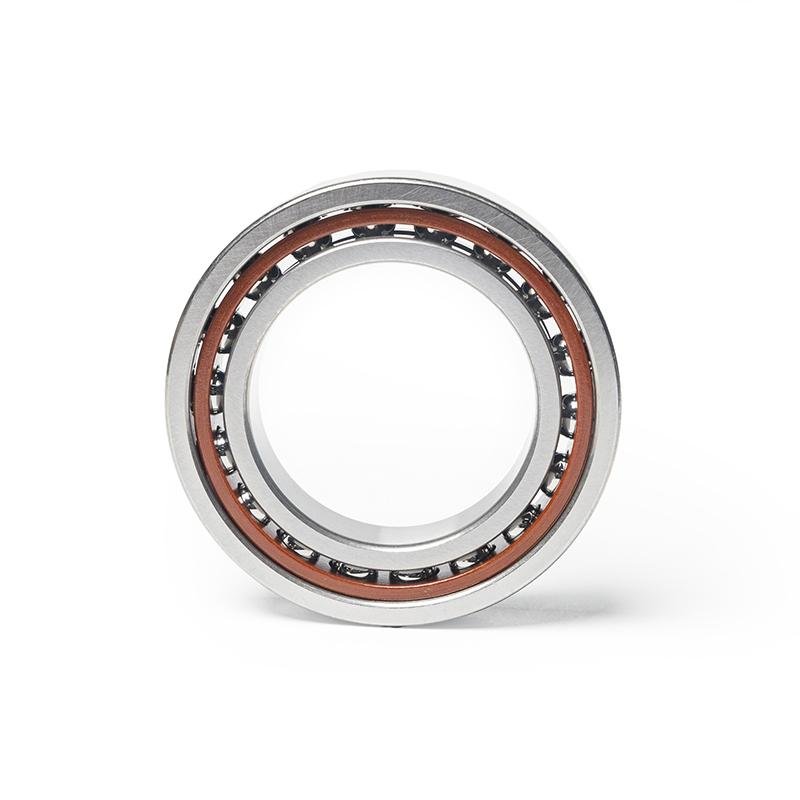
In the competitive world of automotive Tier 1 manufacturing, the "need for speed" is more than a cliché—it is a production requirement. As we move further into 2026, the demand for high-cycle-rate machining of aluminum engine components and EV battery housings has pushed spindle speeds to their physical limits. However, many maintenance managers are reporting a frustrating trend: high-frequency spindles that used to last 10,000 hours are now failing at 4,000.
The symptom is almost always the same—a gradual increase in noise, followed by a thermal spike that triggers an emergency machine stop. When you analyze the failure, the problem is rarely the motor or the drive; it is the inability of the bearing set to handle the combined centrifugal forces and axial thrust at high RPM. For many B2B operations, the solution lies in the specialized architecture of the 70 angular contact ball bearing.
The Problem: Thermal Instability in Combined Loading
Standard radial bearings are excellent for stationary loads, but they are disastrous for high-speed spindles. When a spindle accelerates, it creates a "combined load"—a mix of radial weight and axial push.
Without a dedicated 70 angular contact ball bearing set, your machinery is vulnerable to:
-
Kinematic Souring: At high speeds, the balls begin to slide rather than roll (skidding), leading to localized welding and "smearing" of the raceway.
-
Axial "Growth": As the shaft heats up, it expands. If the bearing cannot accommodate this change in the contact angle, the internal preload spikes, causing a "runaway" heating effect.
-
Loss of Part Geometry: Micro-vibrations lead to poor surface finishes, meaning your high-value automotive parts end up in the scrap bin.
Engineering Precision: The 70 Series Advantage
The "70" series is the industry's answer to the need for a compact, high-speed solution. In the world of ISO bearing designations, the 70 series offers a "light" cross-section. This thin-ring design is intentional; it allows for larger shaft diameters within the same housing space, which increases the overall system stiffness.
Why the 70 Angular Contact Ball Bearing is Different
The 70 angular contact ball bearing is engineered with a specific internal geometry where the inner and outer raceways are offset. This allows the load to be transmitted across the balls at a specific angle (usually 15°, 25°, or 40°).
-
High-Speed Suitability: Because the 70 series has smaller rolling elements than the 72 or 73 series, it generates less centrifugal force, allowing for much higher dN values (RPM x Pitch Diameter).
-
Universally Matchable: B2B procurement teams prefer 70 series units that are "universally matchable," meaning they can be mounted in Back-to-Back (DB), Face-to-Face (DF), or Tandem (DT) arrangements to perfectly balance axial thrust in either direction.
-
Precision Grades: Often manufactured to P4 or P2 (ABEC 7 or 9) tolerances, these bearings ensure that the radial runout is kept to an absolute minimum.
Maximizing MTBF: Strategic Sourcing for 2026
From a B2B perspective, the transition to high-performance 70 angular contact ball bearing units is a calculated move to reduce Total Cost of Ownership (TCO). While the unit cost may be higher than a general-purpose bearing, the savings in reduced downtime and improved part quality are immense.
The Role of Ceramic Hybrids
In the most demanding automotive applications—such as high-speed grinding or EV motor testing—the "standard" steel balls are often replaced with Silicon Nitride (Ceramic) balls.
-
Reduced Mass: Ceramic balls are 40% lighter, which significantly lowers the centrifugal stress on the outer raceway.
-
Electrical Insulation: In EV applications, ceramic balls prevent "arcing" (electrical erosion) that can pit steel surfaces.
-
Lower Operating Temperature: Ceramic hybrids often run 10°C to 15°C cooler than all-steel equivalents, extending the life of the high-speed grease.
Solving the Lubrication Puzzle
Even the best 70 angular contact ball bearing will fail if the lubrication strategy is flawed. For B2B managers, it is vital to match the bearing with a grease that has the correct "speed factor."
-
Grease Fills: For moderate speeds, a factory-set grease fill (typically 20-30% of the free space) provides a "set and forget" solution.
-
Oil-Air Systems: For ultra-high speeds, an oil-air mist system provides continuous cooling and lubrication, carrying away the heat that would otherwise degrade the bearing.
Conclusion: Ensuring Reliable Rotation
As automotive manufacturing becomes more precise and faster, your choice of rotational components becomes the deciding factor in your facility's productivity. The 70 angular contact ball bearing is not just a part; it is a precision instrument designed to solve the problems of thermal expansion and high-speed vibration.
By investing in high-precision 70 series units, you are moving from a "fail-and-fix" maintenance culture to an "optimize-and-excel" operational strategy.
Categorías
Read More
Silverbhaiexchange.com, commonly searched as Silverbhai, Silver Bhai, or silverbhai com, is designed as a modern sports exchange platform focused on performance, clarity, and user control. The platform emphasizes smooth usability, stable market access, and a simplified betting exchange structure that appeals to both new and experienced users. Unlike cluttered platforms, Silverbhai Exchange...

NYC Documentaries Overview For a genuine slice of the Big Apple, look beyond its famous film cameos. These Netflix documentaries capture the city's true pulse and layered past. Each film reveals a distinct fragment of NYC life, from hidden neighborhoods to vibrant subcultures. Together, they showcase an astonishing diversity. Available on Netflix, these selections will continually surprise...

Сериал «добро пожаловать в дерри смотреть» (IT: Welcome to Derry) 2025 года — это мистический проект, продолжающий легендарную вселенную Стивена Кинга. События разворачиваются в небольшом американском городке Дерри, где происходят странные, пугающие события, влияющие на жизнь его жителей. Сериал сочетает элементы хоррора, драмы и психологического триллера, благодаря чему стал...

Explore How Search Engines Choose the Best Answer for a Query In today’s digital landscape, users expect immediate, accurate, and relevant answers to their queries. Search engines have evolved far beyond simply matching keywords—they now analyze context, intent, and content quality to determine the best possible answer for any query. Understanding how search engines select the best...
Introduction https://commedesgarcon.ltd/ is one of the most influential and unconventional fashion brands in the world. Known for its avant-garde designs, bold creativity, and willingness to challenge traditional fashion norms, the brand has built a strong reputation in the global fashion industry. Founded by visionary designer Rei Kawakubo, Comme des Garçons has transformed from a...