Tired Code Ships Fastest — and Fails Fastest: Inside America's 4 A.M. Bug Factory

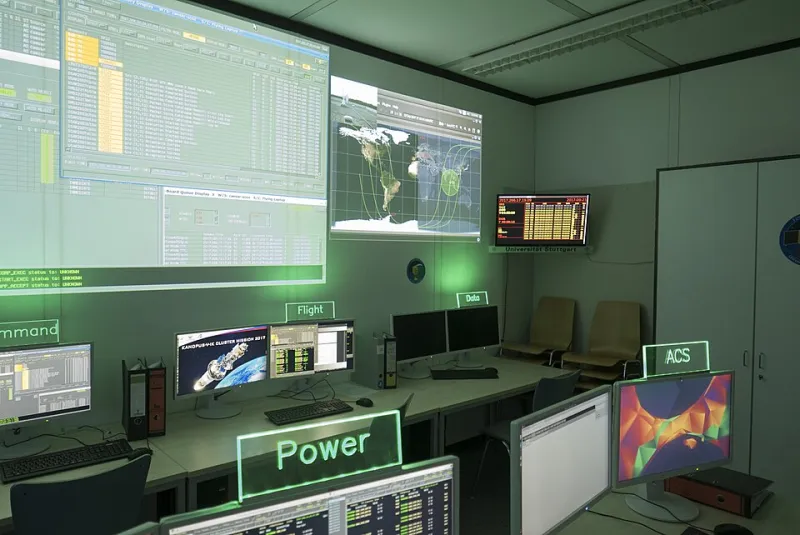
Photo: Wilfredor, CC0, via Wikimedia Commons
There's a specific kind of confidence that shows up around 4 A.M. You've been debugging for six hours, the coffee's cold, and suddenly — the fix appears. You push to main, close the laptop, and drift off feeling like a hacker from a movie montage.
By 10 A.M., your teammate is asking why the checkout flow now throws a 500 error for anyone using Safari.
If you've been building software in America for more than a minute, you know this story. The 4 A.M. commit is a badge of honor in startup culture, right up there with ramen profitability and sleeping under your desk. But here's the uncomfortable truth: that late-night code is probably the worst code you wrote all week.
The Myth of the Midnight Genius
We love the idea that brilliance strikes after dark. Linus Torvalds famously worked odd hours. Half the origin stories in The Social Network happen at 3 A.M. in a dorm. The culture tells us that real builders don't need sleep — they need momentum.
The research tells a blunter story.
Studies on sleep deprivation consistently show that after 17-19 hours awake, cognitive performance drops to levels comparable with a blood alcohol concentration of 0.05% — and at 24 hours, you're functionally at the legal driving limit in all 50 states. Now think about what you'd say to a teammate who showed up to review your pull request two drinks in.
"It's like shipping with a co-pilot who's had a few," says Marcus Delgado, a senior engineer at a fintech startup in Austin. "I rewrote an entire payment reconciliation module at 2 A.M. once. It compiled. It passed the happy-path tests. It also silently rounded every transaction to the nearest dollar. We caught it three weeks later."
Three weeks of bad math. One night of feeling productive.
What the Data Actually Says
The most-cited evidence here comes from a now-famous analysis of Microsoft's Windows Vista codebase, which found that code checked in on Fridays — often the product of a tired, end-of-week push — had significantly higher rates of post-release failures than code committed midweek. More recent developer surveys echo the pattern: engineers self-report that the code they write late at night is the code they're most likely to rip out later.
There's even a folk tradition built around this. Veteran sysadmins refuse to deploy on Fridays. The old-timers at enterprise shops have a rule: no config changes after 3 P.M. These aren't superstitions. They're institutional scar tissue.
So why do we keep doing it?
The Momentum Trap
Part of it is structural. Most indie builders and startup engineers in the US have day jobs, or at least daytime obligations. The only uninterrupted block on the calendar is after everyone else goes to bed. That's not a discipline problem — that's a scheduling reality.
But there's a psychological piece too, and it's sneakier. Late at night, your internal critic gets tired along with the rest of you. Code that would make you pause at noon — that subtle race condition, that API call without a timeout — slides right through at 4 A.M. You're not smarter at night. You're just less likely to argue with yourself.
The result is what you might call the momentum trap: late-night sessions generate more commits, and more commits feel like progress, but the rework rate quietly eats everything you gained. You're not shipping faster. You're shipping twice.
Guardrails That Actually Work
Nobody's going to stop coding at night, and honestly, they shouldn't have to. Some of the best thinking happens after dark — architecture decisions, refactoring plans, whiteboard sketches. The trick is knowing what to do at midnight versus what to defer.
Here's the playbook a few US engineering teams have landed on:
Write, don't ship. Treat your late-night session as a draft. Leave the work in a branch, write yourself a two-line note about what you were thinking, and push it in the morning after a shower and a coffee. The commit can wait four hours. The bug can't.
The 15-minute morning review. One engineer I spoke with in Denver calls it "reading yesterday's mail." Before touching new code, she spends 15 minutes reviewing whatever she wrote the night before. She estimates it catches something worth fixing about half the time.
Automate the boring checks. If you're going to code tired, at least make the robots pick up the slack. Aggressive linting, type checking, and CI gates cost you nothing at 4 A.M. and save you exactly when your judgment is at its worst.
Never deploy tired. This is the one hard rule worth keeping. Merging to a branch is recoverable. Pushing to production at 4:30 A.M. with no one awake to roll it back is how outages happen — and how you end up doing your own 9 A.M. incident review on two hours of sleep.
Speed Isn't the Same as Velocity
The 'ship it now' ethos comes from a good place. American software culture prizes momentum, and honestly, that bias beats the alternative — the endless-planning paralysis that kills half the side projects in this country.
But there's a difference between speed and velocity. Speed is raw hours logged. Velocity is progress that survives contact with next week. Late-night coding optimizes for the first and quietly sabotages the second.
So the next time it's 4 A.M. and you've cracked the bug, do the unheroic thing. Save the file. Write the note. Go to bed.
Your future self — the one reviewing that diff over morning coffee — will thank you. And unlike the 4 A.M. version of you, they'll actually catch the rounding error.