


How Motorcycle Clothing Influences Crash Protection?
Motorcycle travel offers unmatched freedom and enjoyment, but it also exposes riders to significant risk. When a crash occurs, the human body is vulnerable to multiple forms of trauma—abrasion, impact forces, laceration, heat, and environmental hazards. Protective clothing for motorcyclists is engineered to mitigate these risks by using abrasion‑resistant materials, impact‑absorbing armor, and ergonomic design. Research indicates that well‑designed protective gear can reduce the severity of injuries and influence post‑crash outcomes significantly.
This article examines how motorcycle clothing influences crash protection, with a focus on heavy leather vests designed for men and specialized women’s biker vests for long‑distance riding. It explains protective mechanisms, industry standards, real‑world applications, benefits and limitations, common misconceptions, and high‑value insights for riders seeking evidence‑based guidance.
Understanding Motorcycle Clothing as Protective Equipment
Defining Protective Clothing in Motorcycling
Protective motorcycle clothing refers to garments specifically engineered for riders to reduce injury severity in a crash or fall. This category includes jackets, pants, boots, gloves, and protective vests. These items differ from ordinary clothing due to material selection, reinforcement, and safety‑specific design criteria.
Motorcycle protective gear aims to:
-
Resist abrasion that occurs when sliding across pavement after a fall.
-
Absorb and distribute impact forces to reduce force transmitted to bones and joints.
-
Reduce cuts and lacerations by providing a physical barrier.
-
Enhance positioning of safety components so armor stays in place when needed.
Relevance of Protective Clothing
Motorcycle crashes often result in serious soft‑tissue injuries. Research shows that riders wearing protective clothing such as jackets and gloves were significantly less likely to be hospitalized following a crash compared with those wearing ordinary streetwear. Soft tissue injuries, including road rash, lacerations, and bruises, are among the most common outcomes in motorcycle crashes, and protective apparel is proven to mitigate these harms.
The choice and quality of protective clothing can influence not only injury rates but also recovery trajectories. Riders with adequate protective gear report less pain, fewer hospital days, and faster return to normal activities in longitudinal studies.
Protective Mechanisms: How Clothing Reduces Crash Harm
Abrasion Resistance
Abrasion resistance is the ability of a material to tolerate sliding contact with rough surfaces without tearing or wearing through. Materials such as full‑grain leather (typically 1.2–1.4 mm thick) and high‑denier textile (e.g., Cordura, Kevlar, Dyneema) exhibit superior abrasion resistance compared with everyday fabrics like denim or cotton.
Leather has a well‑established track record in abrasion resistance, making it a preferred choice in protective motorcycle gear, especially for high‑impact areas like shoulders, chest, and back.
Impact Absorption
Protective clothing often incorporates armor—specialized energy‑absorbing inserts in key zones such as shoulders, elbows, back, and chest. European standards such as EN 1621 classify armor by its ability to reduce transmitted forces on impact:
-
Level 1: Basic impact absorption
-
Level 2: Enhanced impact absorption with greater energy‑dampening properties
The combination of a robust outer shell and certified armor ensures that some of the force from impact is dispersed before reaching the wearer’s body.
Seam and Construction Strength
Protective clothing must withstand force not only at material surfaces but also at seams. Reinforced seam construction using aramid fibers (e.g., Kevlar stitching) reduces the likelihood of garment failure during a slide, preserving barrier integrity across critical areas.
Ergonomics and Fit
Protective gear that fits correctly maintains armor positioning and reduces movement during a crash, which is critical for effective protection. Poor fit compromises the location of protective elements, reducing overall efficacy.
Leather Motorcycle Vests and Long‑Distance Riding
Men’s Heavy Leather Motorcycle Riding Vest
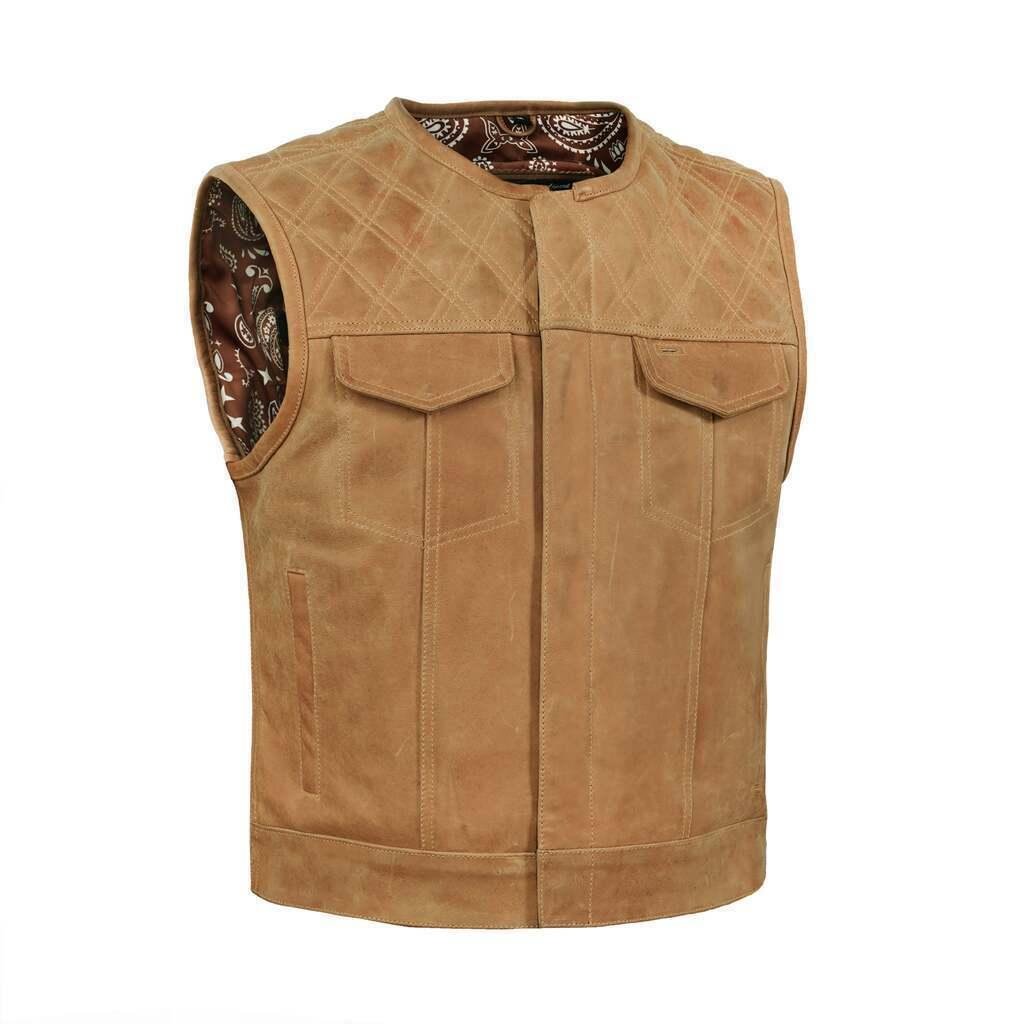
A men heavy leather motorcycle riding vest provides both passive and active protection. As an outer protective layer, heavy leather resists abrasion, reducing road rash and skin tearing in the event of a crash. The inherent durability, thickness, and tensile strength of leather contribute to longer slide resistance compared with non‑specialized clothing.
Depending on design, these vests may also integrate attachment points or pockets for armor in areas such as sternum and back, enhancing impact protection. While leather alone primarily addresses abrasion resistance, when combined with protective inserts, a vest becomes a multi‑modal safety garment.
For a range of professionally manufactured leather vests for men, see men heavy leather motorcycle riding vest.
Practically, riders on touring or cruiser motorcycles favor heavy leather vests for their balance of abrasion protection and weather resistance. Long highway distances increase exposure to high‑speed slides, making foundational materials such as leather advantageous for mitigating soft tissue injuries.
Women’s Biker Vest for Long Distance Riding
Women riders, particularly those undertaking long‑distance journeys, benefit from tailored protective vests that account for both ergonomic fit and crash safety. A women biker vest for long distance riding must integrate protective spacers or armor panels that maintain coverage even in extended seated positions.
The fit and cut for female riders are engineered to improve mobility and comfort without compromising coverage of critical areas like lower ribs and upper torso. This tailored fit also helps ensure that protective components remain aligned during impact, a key factor for effective force distribution.
For quality options in this category, see women biker vest for long distance riding.
In long‑distance applications, additional features such as wind resistance, breathability, and moisture wicking enhance overall safety by minimizing rider fatigue.
Industry Standards and Performance Benchmarks
EN 17092: Protective Garments Standard
The EN 17092 suite of standards classifies motorcycle clothing by protective performance in abrasion, tearing, and seam strength. Ratings range from basic (Class B or A) through advanced (Class AA and AAA) with AAA offering the highest level of abrasion resistance.
Armor Certification (EN 1621)
Armor inserts are independently tested for impact absorption under controlled conditions. Gear that features CE Level 2 armor provides better impact performance than Level 1 kits and is recommended for high‑risk situations such as high‑speed riding.
Expert Insights & Best Practices
Prioritize Certified Protection
Experts recommend choosing clothing that meets or exceeds recognized protective standards (EN 17092, EN 1621). Certified gear ensures third‑party validation of protective performance rather than relying solely on manufacturer claims.
Match Gear to Riding Style
Long‑distance riders should select gear emphasizing abrasion resistance and sustained comfort. Tourers and highway riders benefit from heavier materials and robust armor systems, whereas urban riders may prefer gear optimized for mobility and ventilation without sacrificing basic protection.
Ensure Proper Maintenance and Fit
Protective clothing should be inspected periodically for wear, stitching integrity, and armor condition. Incorrect fit, misplaced armor, or degraded materials reduce protective effectiveness substantially.
Common Misconceptions
Protective Clothing Prevents All Injuries
No motorcycle garment can completely prevent trauma in every crash scenario, especially high‑energy impacts involving vehicle intrusion or crushing forces. Protective clothing primarily reduces soft‑tissue injuries and lessens impact severity but cannot guarantee fracture avoidance in all cases.
Leather Is Obsolete Compared to Textiles
While advanced textiles match or exceed leather in specific metrics like weight or climate adaptability, leather remains a benchmark for abrasion resistance in many protective categories. Material choice should be informed by riding context, but leather continues to be a relevant protective material.
Conclusion
Motorcycle clothing plays a crucial role in reducing the physical toll of crashes by combining abrasion resistance, impact absorption, and ergonomic design. Heavy leather vests and tailored biker vests for long‑distance riding provide foundational protection that addresses common injury vectors such as road rash and blunt force trauma. Riders who invest in certified, well‑fitting protective gear with appropriate armor and construction quality derive measurable safety benefits, improved recovery outcomes, and enhanced comfort during extended riding. Sound selection and maintenance of protective clothing are essential elements of responsible riding practice rooted in industry standards and empirical evidence.
FAQs
1. How does motorcycle clothing reduce injury severity in a crash?
Protective clothing combines abrasion‑resistant materials with impact‑absorbing armor to reduce the energy transferred to the body and minimize skin tearing and lacerations. Research shows a correlation between protective gear use and lower injury severity.
2. What protective standards should riders look for?
Motorcycle clothing incorporating EN 17092 ratings (for abrasion and seam strength) and EN 1621 impact certifications offers validated protective performance. Higher classes (AA/AAA, Level 2 armor) generally provide better protection.
3. Does leather protect better than textile?
Leather historically provides strong abrasion resistance, though modern textiles engineered with high‑performance fibers can achieve similar protective metrics when correctly constructed. The choice depends on riding style and conditions.
4. Can a vest alone protect against fractures?
A protective vest primarily mitigates soft tissue injuries and reduces force transmission but cannot guarantee prevention of fractures in high‑impact crashes without integrated or supplemental armor.
5. Why is proper fit important for crash protection?
Proper fit ensures armor stays aligned with critical body areas (e.g., shoulders, back) during a crash, maximizing its effectiveness in absorbing and dissipating impact energy.
6. Are protective vests suitable for long‑distance rides?
Yes. High‑quality vests designed for long distances balance protection with comfort, abrasion resistance, and weather adaptability to maintain safety and rider performance over extended periods.
7. How often should protective clothing be replaced?
Garments should be replaced after significant impact events or when material degradation is evident. Armor and material breakdown over time reduces protective capability.
Kategorien
Mehr lesen
A fabricated identity within tech journalism has been exposed, revealing a long-running deception. The individual, presenting as both a blogger and a CTO, published analyses criticizing Windows performance. His dual personas were leveraged to create a false echo chamber, misleading several publications. This scheme successfully circulated exaggerated claims about Windows Vista and 7 for years....

A new Dutch television adventure begins, as Nicolette van Dam and Bas Smit take the helm for the local adaptation of a global dating phenomenon. This unique social experiment, where singles forge bonds without ever meeting face-to-face, challenges modern notions of romance. The hosts expressed shared enthusiasm, viewing the series as a heartfelt antidote to superficial, swipe-based dating...
Television Legend David Letterman Embarks on New Journey with Netflix After a brief hiatus from the spotlight, television pioneer David Letterman is making his anticipated return through a partnership with streaming giant Netflix. Letterman's illustrious career spans nearly half a century in broadcasting, beginning with humble origins as a local news anchor and weather reporter. His unique...
The ongoing evolution of Dune: Awakening's endgame content continues to shift the game's focus away from its initial PvP-heavy design. At launch, players exploring the vast deep desert faced intense conflicts, as only a small fragment—roughly 10%—was designated as PvE-only, with the majority being contested zones ripe for combat. A subsequent hotfix on June 26 balanced this by...
Healthcare documentation has become one of the most demanding aspects of modern medical practice. While accurate records are essential for patient safety, compliance, and continuity of care, the time required to complete detailed documentation continues to grow. Physicians often find themselves balancing patient care with hours of charting, which can affect efficiency and job satisfaction. PERS...
